Key Takeaways
- A tank water heater usually lasts about 8 to 12 years; past that, plan for replacement.
- Rusty water from the hot side only, rumbling and leaks at the base are the classic warning signs.
- A leak from the tank itself can't be repaired.
- Many problems, like a bad thermostat, element or relief valve, are fixable on an otherwise healthy tank.
1. It's More Than About 10 Years Old
Age is the single best predictor. The steel tank inside is protected by a glass lining and a sacrificial anode rod; once the rod is used up, the tank starts to rust from the inside. Most tank water heaters last roughly 8 to 12 years, less in homes where nobody ever flushes them.
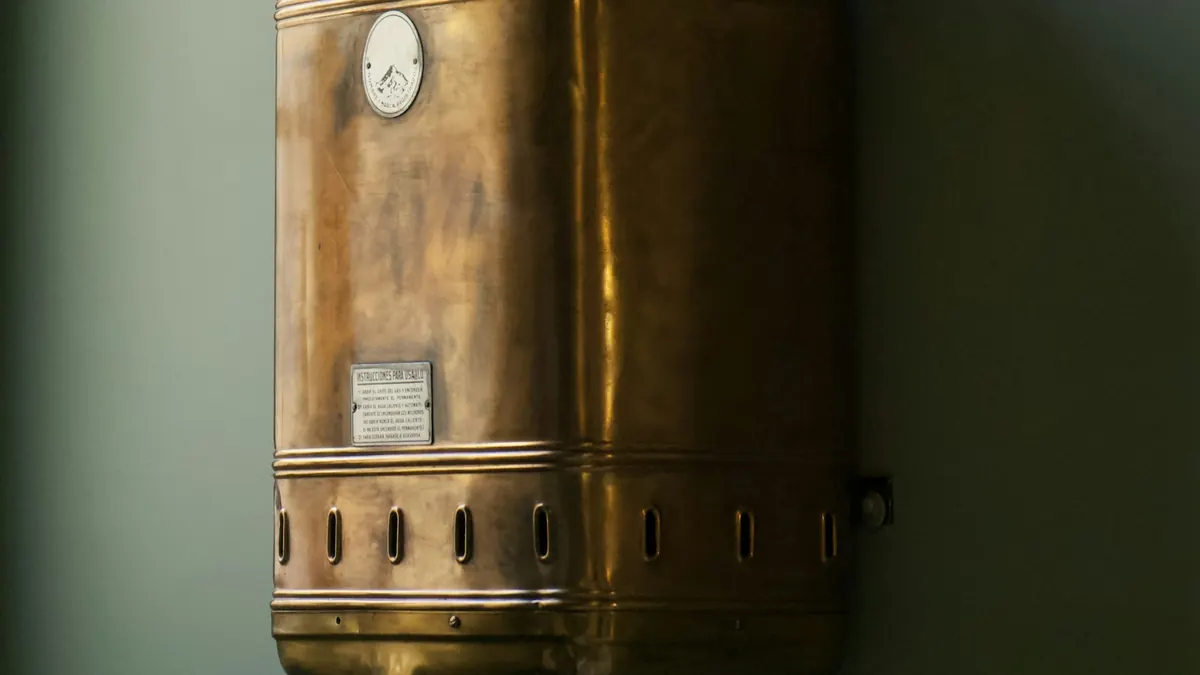
The manufacture date is usually coded into the serial number on the label. Each brand uses its own format, but the month and year are often the first characters. If you can't decode it, send us a photo of the label.
2. Rusty or Discolored Hot Water
Run the hot water alone, then the cold alone. If only the hot side comes out rusty, the problem is almost certainly inside the water heater. If both are discolored, the cause is more likely old galvanized pipes or a disturbance in the water main; see galvanized pipes in older homes.
3. Rumbling, Popping or Banging
That kind of water heater noise comes from sediment: minerals settle on the bottom of the tank. Water trapped under that layer boils and pops when the burner or element heats it. Flushing can help on a younger tank. On an older one, the noise usually means the sediment has been cooking for years and the tank is wearing thin.
4. A Water Heater Leaking at the Base
Not every puddle means the tank is done. Check where the water is coming from:
- Fittings on top: often a loose connection or a failed nipple. Repairable.
- The relief valve or its discharge pipe: see sign 7 below.
- The drain valve: sometimes just needs tightening or replacing.
- The tank itself, or from under the jacket: the tank has failed. It can't be repaired.
If the tank is leaking, turn off the gas or the power to the heater, close the cold water valve on top, and call (203) 568-2475. A failing tank can go from a drip to a flood without warning.
5. Not Enough Hot Water
Showers that go cold faster than they used to can mean a failed lower heating element on an electric heater, a bad thermostat, a broken dip tube, or a tank half full of sediment. It can also simply mean the household has outgrown the heater. Our tank vs. tankless guide covers sizing.
6. Pilot or Burner Problems
On a gas water heater, a pilot that won't stay lit usually points to the thermocouple or flame sensor, the gas control or a draft problem. Yellow, lazy flames or soot around the burner mean poor combustion and need attention right away.
If you smell gas near the water heater, leave the house and call 911 or your gas utility from outside. Don't relight anything.
7. A Dripping Relief Valve
The temperature and pressure relief valve opens when pressure in the tank gets too high. A valve that drips now and then often means thermal expansion: when the water heats, it has nowhere to go. An expansion tank on the cold line usually fixes that. A valve that keeps running needs to be checked right away; never cap or plug it.
Repair or Replace?
| What you see | Likely cause | Usually |
|---|---|---|
| Leak from the tank body | Tank corroded through | Replace |
| Rusty hot water, tank over 10 years | Anode used up, tank rusting | Replace |
| No hot water, electric | Element or thermostat | Repair |
| Pilot won't stay lit | Thermocouple or gas control | Repair |
| Relief valve drips on heating | Thermal expansion | Add an expansion tank |
| Rumbling, younger tank | Sediment | Flush and monitor |
When water heater replacement in Hamden, CT makes sense, our water heater installation team sizes the new one to your household. In Connecticut, replacing a water heater generally needs a permit, so ask any installer whether it's included.
Flush a tank water heater once a year and have the anode rod checked every few years. It's the cheapest way to get the full life out of a tank.