Key Takeaways
- Tank heaters cost less up front and are simple; tankless units last longer and never run out, within their flow limit.
- Cold winter water lowers how much hot water a tankless unit can deliver at once.
- Homes with a boiler can heat water with an indirect tank fed by the boiler.
- Size a tank by its first-hour rating and a tankless unit by gallons per minute.
How Each One Works
Tank water heaters
A tank keeps 40, 50 or more gallons hot at all times, heated by gas, electricity or oil. It's simple and familiar, and it delivers a lot of hot water at once, until the tank runs out and has to recover.
Tankless water heaters
A tankless unit heats water only as it flows through, using a powerful gas burner or electric element. There's no stored hot water to run out of, but there's a limit on how much it can heat at one time, measured in gallons per minute.
Indirect water heaters
An indirect is an insulated tank with a coil inside, heated by your boiler instead of its own burner. In homes that already have a hot-water boiler, which is a lot of Connecticut homes, it's often an efficient and long-lasting choice.
Side by Side
| Tank | Tankless | Indirect | |
|---|---|---|---|
| Up-front cost | Lowest | Higher | Moderate |
| Typical life | About 8 to 12 years | Often 15 years or more | Often longer than a standard tank |
| Hot water supply | Until the tank runs out | Unlimited, up to its flow rate | Large, recovers fast |
| Space | Floor space | Wall-mounted, small | Floor space |
| Maintenance | Yearly flush | Yearly descaling | Boiler service covers most |
| Needs | Gas, electric or oil | Gas line and venting sized for it | A boiler |
The Connecticut Catch: Cold Winter Water
A tankless unit has to raise the water from whatever temperature it comes in at. In a Connecticut winter, incoming water is much colder than in summer, so the same unit delivers fewer gallons per minute in January than in July. A unit that easily runs two showers in summer may struggle in winter if it was sized too small. Proper sizing is based on winter water, not summer.
Water Heater Sizing
- For a tank, look at the first-hour rating on the label: roughly how much hot water it can deliver in a busy hour. Match it to your busiest morning.
- For tankless, add up the flow of everything that might run at once, such as two showers and a dishwasher, and size for that at winter water temperatures.
- For an indirect, the boiler has to have enough capacity to heat the house and the tank.
Which One Fits Your House?
- A tank if you want the lowest up-front cost and a simple swap for what you have.
- Tankless if you have natural gas, want long life and space savings, and are willing to descale it yearly.
- An indirect if you have a hot-water boiler in good shape, or are replacing the boiler anyway.
Switching from oil to gas heat? It's a good time to rethink the water heater too. See switching from oil to gas heat.
Installation Details That Matter
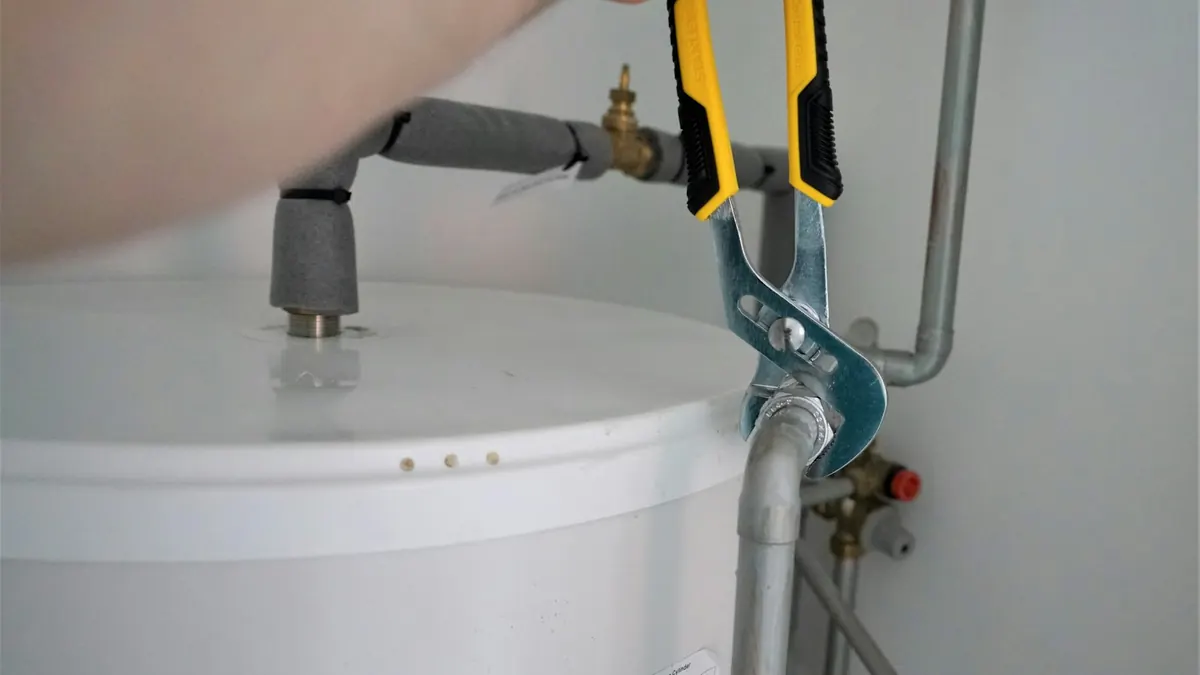
Gas tankless units often need a larger gas line and new venting. Replacing a tank in an older basement can involve a new expansion tank, new shut-off valves and updated venting. In Connecticut, water heater replacement generally needs a permit. Our team for water heater installation in Hamden, CT covers all of it.
Not sure your current one needs replacing yet? Start with 7 signs your water heater is failing.