Key Takeaways
- A sight glass with water in it means steam; a pressure gauge around 12 to 15 psi and a pump mean hot water.
- Cold hot-water radiators usually need bleeding, or the system pressure is low.
- Banging in steam systems usually comes from water trapped in pipes or radiators that aren't pitched right.
- A relief valve dripping on a hot-water boiler often points to a failed expansion tank.
Steam or Hot Water? How to Tell
| Look for | Steam system | Hot-water system |
|---|---|---|
| On the boiler | A glass tube showing the water level (sight glass) | A gauge reading pressure and temperature |
| Normal pressure | Very low, a pound or two | About 12 to 15 psi cold, higher when hot |
| Radiator vents | A small vent on the side that hisses | A small square or slotted bleed valve |
| Pumps | None needed | A circulator pump on the piping |
Hot-Water Systems: Cold Radiators
Bleed the air out
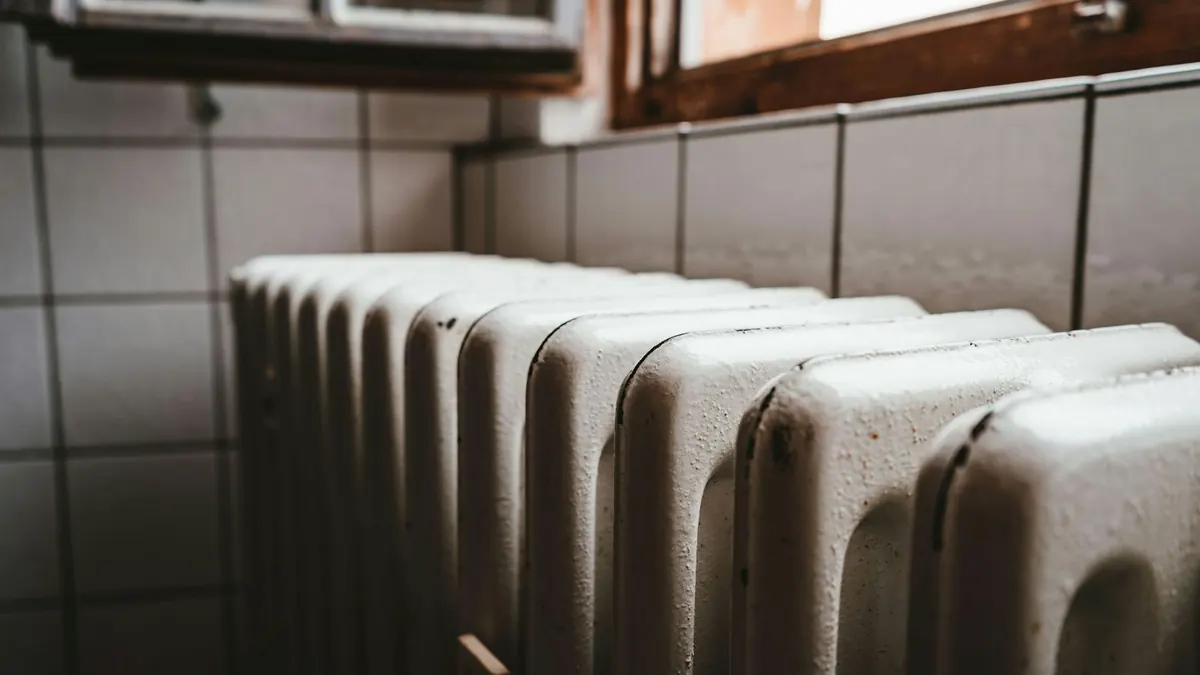
Air collects at the top of radiators and stops hot water from filling them. A radiator that's warm at the bottom and cold at the top almost always needs bleeding.
- Turn the thermostat up so the system is running.
- Hold a rag or cup under the bleed valve and open it slowly with a radiator key or screwdriver.
- Let the air hiss out until a steady stream of water appears, then close it.
- Work through every radiator, and check the boiler pressure afterward.
Check the pressure
Bleeding releases water, and most systems refill automatically through a fill valve. If the gauge reads well below about 12 psi with the boiler cold, the system may not be refilling, and upstairs radiators will stay cold. That needs a tech.
Relief valve dripping
A hot-water boiler has a relief valve that opens around 30 psi. If it drips when the boiler heats up, the expansion tank has often failed, so the pressure spikes. Don't cap the valve; have the tank checked.
One zone cold
In homes with several thermostats, one cold zone usually means a stuck zone valve or a failed circulator on that zone.
Steam Systems: Banging Pipes and Uneven Heat
A little ticking as the pipes warm up is normal. Loud banging, called water hammer, is not. It happens when steam hits water that's trapped where it shouldn't be.
- Radiator pitch: in a one-pipe steam system, each radiator should tilt slightly toward its valve so condensed water drains back. A shim under the far legs often fixes it.
- Valve fully open: one-pipe steam radiator valves should be fully open or fully closed. Half open traps water.
- Sagging pipes: a pipe that sags in the basement holds water and bangs.
- Water level too high: overfilling the boiler pushes water into the steam pipes.
Radiators that stay cold on a steam system often have a clogged air vent. The small vent on the side of the radiator should let air out as steam arrives, then close. If it's painted over or stuck, steam can't get in.
If the sight glass on a steam boiler is empty, turn the boiler off and let it cool before any water is added. Adding cold water to a hot, dry boiler can crack it. If it keeps losing water, call for service.
Yearly Service Pays Off
A boiler that's cleaned and checked every fall burns more efficiently and fails less often. For hot-water systems that includes the pressure, the expansion tank and the relief valve; for steam, the low-water cutoff, the sight glass and the water level. Many oil-fired boilers also need the nozzle and filter changed each year.
For boiler repair in Hamden, CT, our heating repair team works on steam and hot-water boilers and radiator systems. If your boiler is near the end of its life, see switching from oil to gas heat before choosing a replacement.
Before the season starts, walk around and make sure no radiator is blocked by furniture or covered with heavy fabric. Both cut the heat a radiator can give off.