Key Takeaways
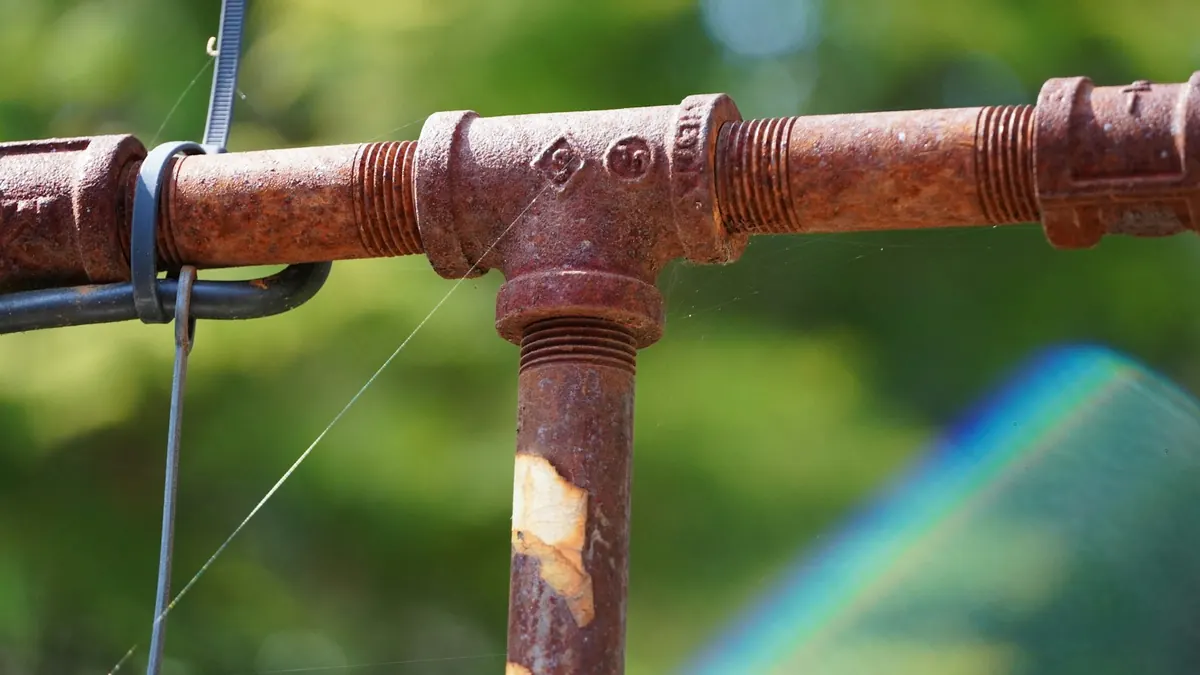
- Galvanized pipe is gray steel with threaded fittings; a magnet sticks to it.
- It rusts from the inside, which narrows the pipe and lowers water pressure over decades.
- Leaks usually start at the threaded joints, where the pipe wall is thinnest.
- Replacing the worst runs first is an option; a full repipe fixes it for good.
How to Tell If You Have Galvanized Pipe
Go to the basement and look at the water lines near the meter and the water heater.
- Color: dull gray or silver, sometimes with rust spots. Copper is orange-brown; PEX is plastic, usually red, blue or white.
- Fittings: galvanized joints are threaded, with visible threads at each fitting.
- Magnet test: a magnet sticks firmly to galvanized steel. It won't stick to copper.
- Scratch test: scratch it with a key. Galvanized shows silver-gray metal.
Many older Hamden houses have a mix: copper added during a bathroom remodel, galvanized still running inside the walls. Older neighborhoods near the New Haven line, like Whitneyville, Highwood and Newhall, are where we see the most of it.
What Happens to Galvanized Pipe Over Time
The zinc coating protects the steel for a few decades. Once it wears through, the inside of the pipe rusts, and the rust builds up in layers. A pipe that started at three-quarters of an inch can end up with a passage the size of a pencil.
- Low water pressure, worst at upstairs fixtures and when two run at once
- Rusty or brown water, especially first thing in the morning
- Leaks at the threads, where cutting the threads left the pipe wall thinnest
- Corrosion where galvanized meets copper without the right connector
Galvanized pipe commonly lasts somewhere around 40 to 60 years. Most of what's left in Hamden is past that.
Your Options
Spot repairs
Fixing a single leaking joint buys time, and sometimes that's the right call. The catch is that the pipe on either side is the same age. Once one joint goes, others usually follow.
Partial repipe
Replacing the main runs in the basement, from the meter to the water heater and out to the risers, is often the best value. It's accessible, it's where the flow matters most, and it can noticeably improve pressure on its own.
Whole-house repipe
Whole-house galvanized pipe replacement fixes the problem for good, and it's the right choice before a big renovation while walls are already open. It means small access openings in walls and ceilings, and the water is off during working hours.
PEX vs. Copper
| PEX | Copper | |
|---|---|---|
| Cost | Usually lower | Usually higher |
| Installation | Flexible, fewer joints, faster | Rigid, more fittings |
| Wall openings | Fewer, smaller | More |
| Freeze tolerance | More forgiving | Splits when frozen |
| Best for | Fishing through finished walls | Exposed basement runs |
Both are good choices. Many repipes use copper in the basement and PEX inside finished walls. Our repiping and installation team will explain what fits your house.
Replace old gate valves while you're at it. A main shut-off that won't close is a bad surprise during a leak.
Buying an Older Home?
Galvanized supply pipe is one of the most common findings in a pre-purchase plumbing inspection. Knowing about it before closing gives you a real number to negotiate with.
If low pressure is the only symptom you've noticed, also read our guide to low water pressure first, since a clogged aerator or a half-closed valve can look the same.