Key Takeaways
- A basement floor drain backing up usually means the main sewer line is partly blocked, not the drain.
- Roots, grease, wipes and sagging or broken pipe are the usual causes in older Hamden homes.
- Stop using water in the house during a backup, and don't open the cleanout yourself.
- If roots keep coming back, the damaged section of pipe needs repair, not just cleaning.
How the Floor Drain Fits In
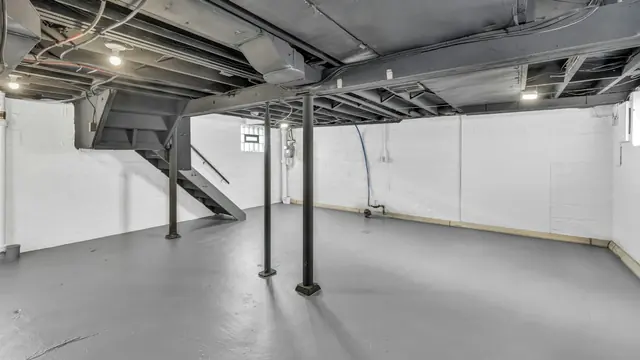
Every drain in the house, from the upstairs toilet to the washing machine, joins into one main line that leaves through the basement wall and runs under the yard to the public sewer. That pipe from the house to the sewer main is called the lateral. When it's partly blocked, wastewater backs up to the lowest opening it can find: the basement floor drain.
That's why the backup often happens when someone runs the washing machine or a shower upstairs, even though nothing is wrong with those fixtures.
The Usual Causes in Hamden, CT Homes
Tree roots
Tree roots in a sewer line are the cause we see most. Many Hamden streets are lined with mature trees, and many older houses have clay or cast iron laterals with joints every few feet. Roots find the moisture at those joints, grow in, and catch everything that passes. Backups that come back every year or two are a classic sign of roots.
Grease, wipes and paper
Cooking grease goes down warm and liquid, then cools and coats the pipe. "Flushable" wipes don't break down the way toilet paper does. Together they build a plug, especially where the pipe is rough or sags.
A sag, crack or collapse
Older pipe can settle and form a low spot, called a belly, where solids collect. Cast iron rusts and scales inside; clay cracks. A collapsed section blocks the line almost completely.
A problem in the public sewer
Less often, the blockage is in the street. If neighbors are backing up too, call the sewer authority. Hamden is served by the Greater New Haven Water Pollution Control Authority.
Sewage vs. Groundwater
Look at the water. Gray or brown water with a sewage smell is a drain problem. Clear water seeping up after heavy rain or snowmelt is usually groundwater, which is a job for a working sump pump, not a drain cleaner.
What to Do During a Sewer Backup in Hamden, CT
- Stop running water anywhere in the house: no flushing, showers, laundry or dishwasher.
- Keep children and pets away from the water. Sewage carries bacteria.
- Don't pour chemical drain cleaner into the floor drain. It rarely clears a main line and makes the repair more dangerous.
- Don't open the cleanout cap yourself while the line is backed up; the water behind it is under pressure.
- Call (203) 568-2475 and take photos for your insurance.
How It Gets Fixed
First the sewer line clog is cleared, usually with a cable machine run through the sewer cleanout. Clearing it also tells you something: roots on the cable point to joint damage, grease points to the kitchen line. Looking inside the line with a sewer camera shows exactly where the damage is and how bad it is.
If the pipe is sound, cleaning and better habits may be enough. If roots or a sag keep closing it, our sewer and drain cleaning team repairs or replaces the damaged section so the backups stop. A cleanout near the foundation makes any future clearing faster.
A backwater valve on the main line lets wastewater flow out but closes if the public sewer backs up toward your house. It's worth asking about if your street has had sewer surcharges in big storms.
Who Owns the Pipe?
In most of the area, the homeowner is responsible for the lateral from the house to the public sewer. Exactly where your responsibility ends can vary, so check with the sewer authority for your street before any digging.
How to Keep It From Coming Back
- Wipe greasy pans with a paper towel before washing them
- Flush only toilet paper, never wipes, even ones labeled flushable
- Use strainers in tubs, showers and the laundry sink
- Have the main line cleared before a problem, if roots have been a pattern
- Know where your cleanout is and keep it accessible
For water anywhere it shouldn't be, also see our guide to what to do before the plumber gets there.